
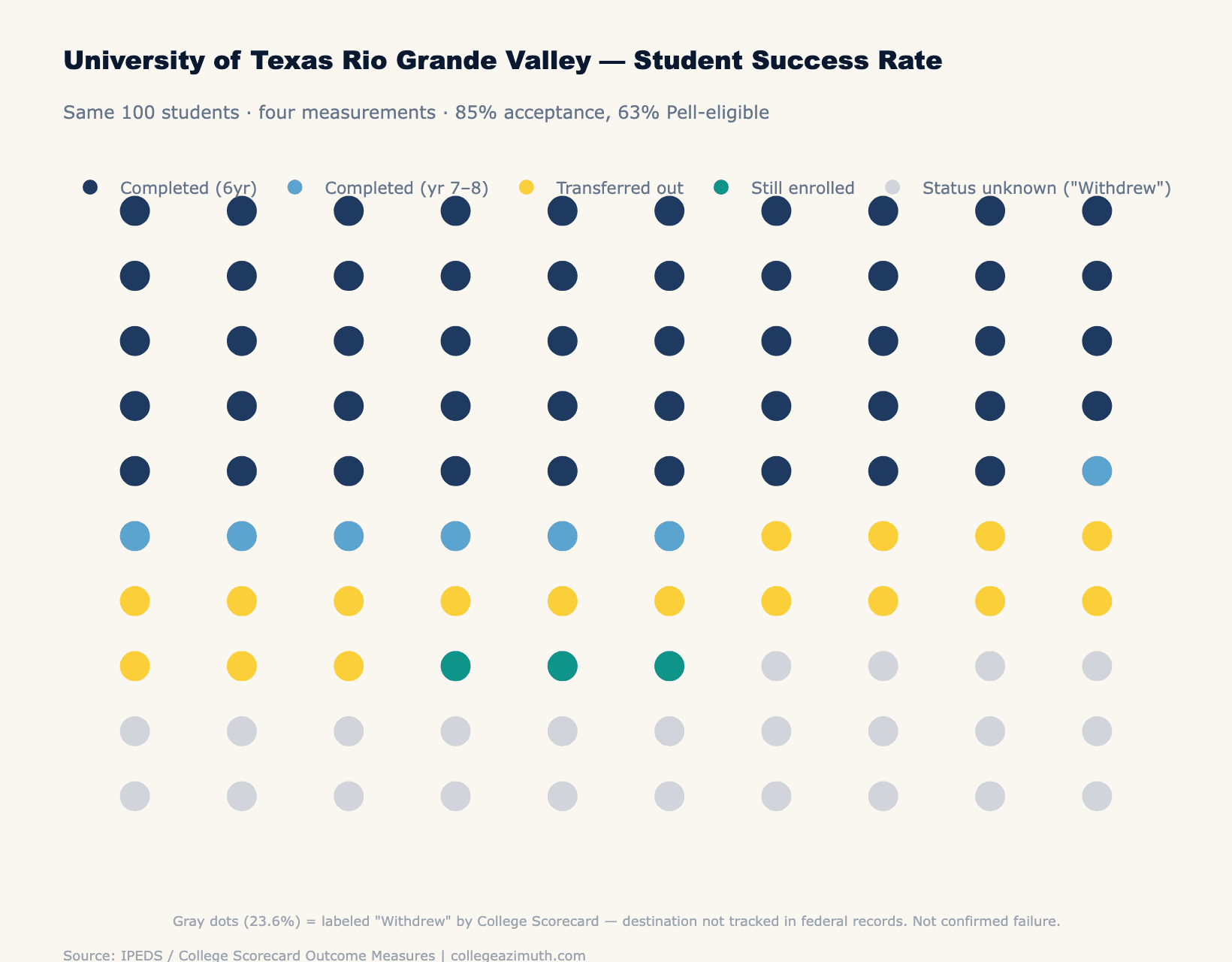
UTRGV Graduation Rate Gap
Interactive visualization showing the graduation rate gap between Pell and non-Pell students at UTRGV.
Data-driven analysis of college outcomes, affordability, and value. Research insights powered by verified federal data.
By Daniel Rogers · College Azimuth Research
Explore our data stories through interactive charts. Click any chart to interact with the data.
Interactive visualization showing the graduation rate gap between Pell and non-Pell students at UTRGV.
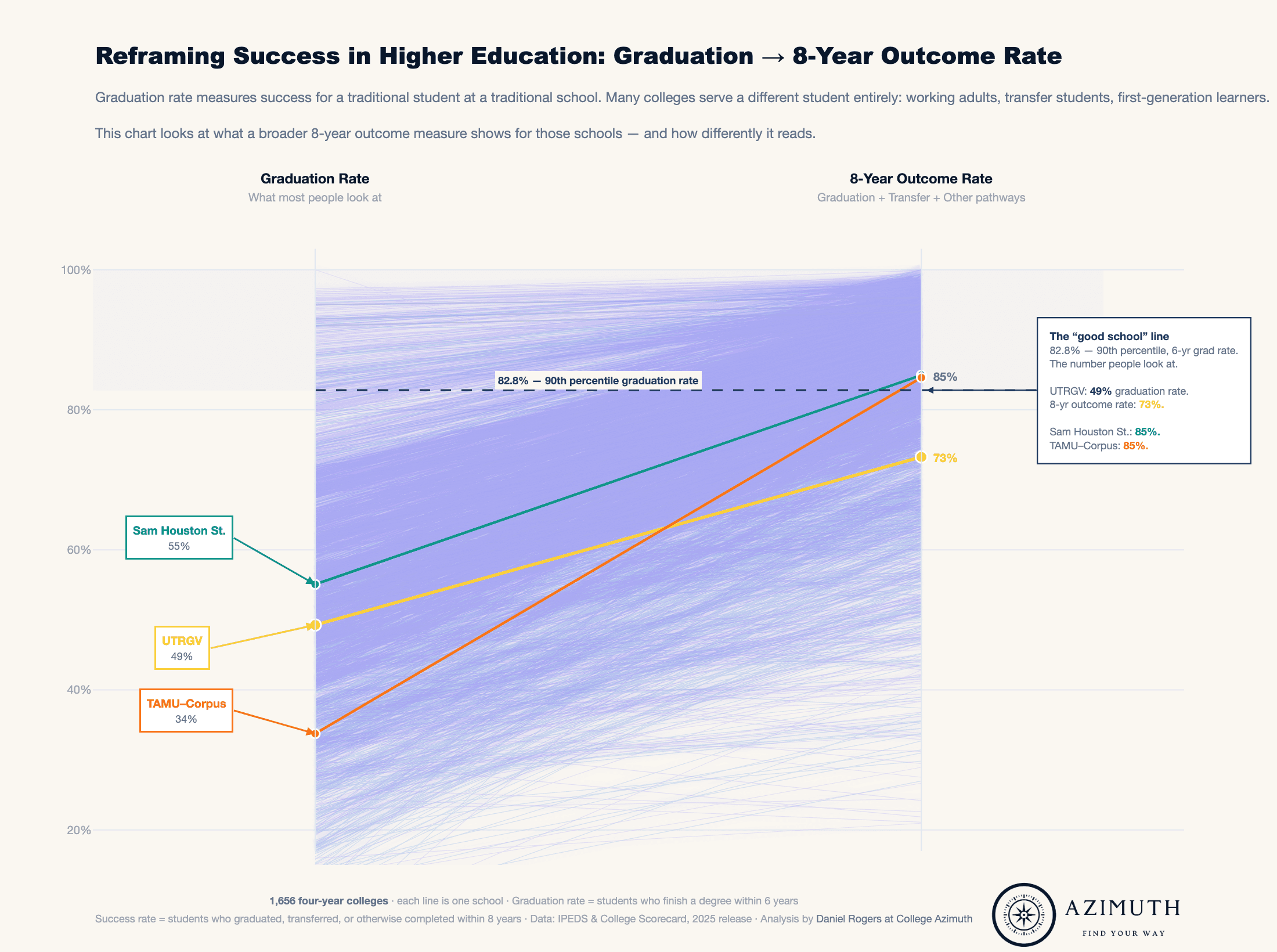
Compare graduation rate gaps across multiple institutions with this interactive slope chart.

The standard graduation rate excludes most students. Federal data shows the real number is 28 points higher at schools like UTRGV. Here's what the metric actually measures — and what it misses.
 Daniel Rogers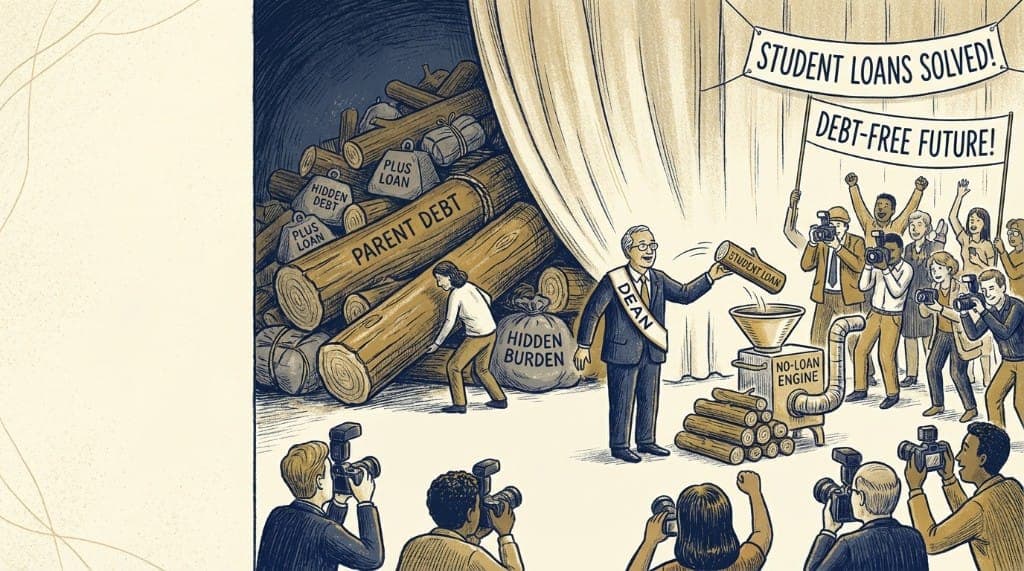
How many loans would a no-loan school loan, if a no-loan school could give loans? If you said the answer was zero, you'd be wrong. In reality it's over 20,000 families with over a billion dollars in parent loans outstanding (across the 28 institutions with publicized no-loan or "Free tuition" plans). A couple of weeks ago Yale announced an expansion of "Free tuition" policies for students whose families are earning under 200k. I don't want to pick on Yale specifically, but we're gonna use thi
Daniel Rogers
Parent PLUS loans hide a second debt burden. We analyzed debt burdens to show how family finances change when parents borrow too—and who gets squeezed.
Daniel Rogers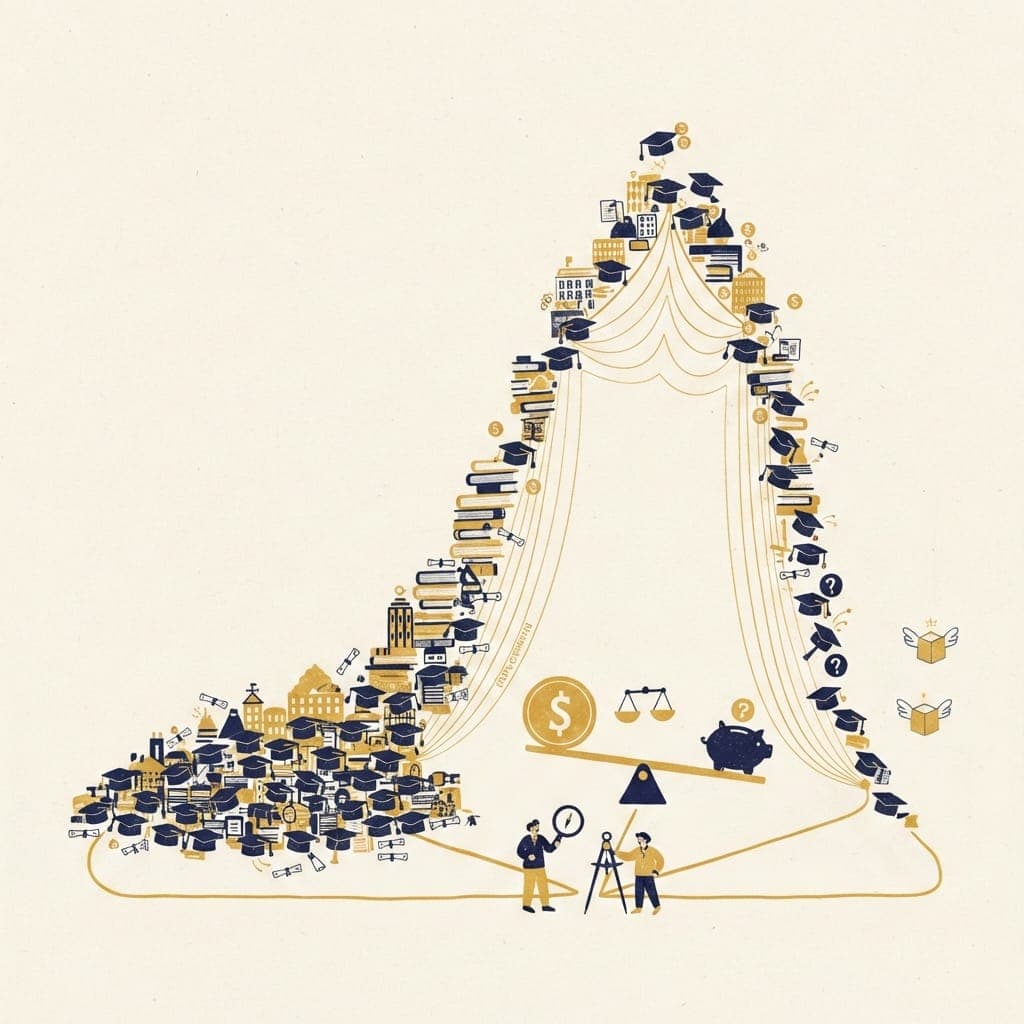
A risk framework for evaluating college debt: Green Zone, Blue Zone, Yellow Zone, Red Zone. Which schools are worth the bet?
Daniel Rogers
Financial GPS is a new framework for navigating college debt. See how payment burden tiers work, why ROI metrics fall short, and how to find schools where debt actually works.
Daniel Rogers
I want to start Part 3 with something that's been on my mind: the power of example, and the danger of leaving things unsaid. I sometimes sense a hesitance among many to talk about the downsides of college. The worry is that acknowledging the risks might discourage people from pursuing it. I had a conversation recently with a mentor whose work I really admire. She questioned whether it made sense to talk about downsides at all. Wouldn't it be better to focus on the opportunity? Here's what I t
Daniel Rogers
400,000 families a year can't afford their Parent PLUS loans. At private universities, 58% are underwater. Here's what return on investment calculations miss.
Daniel Rogers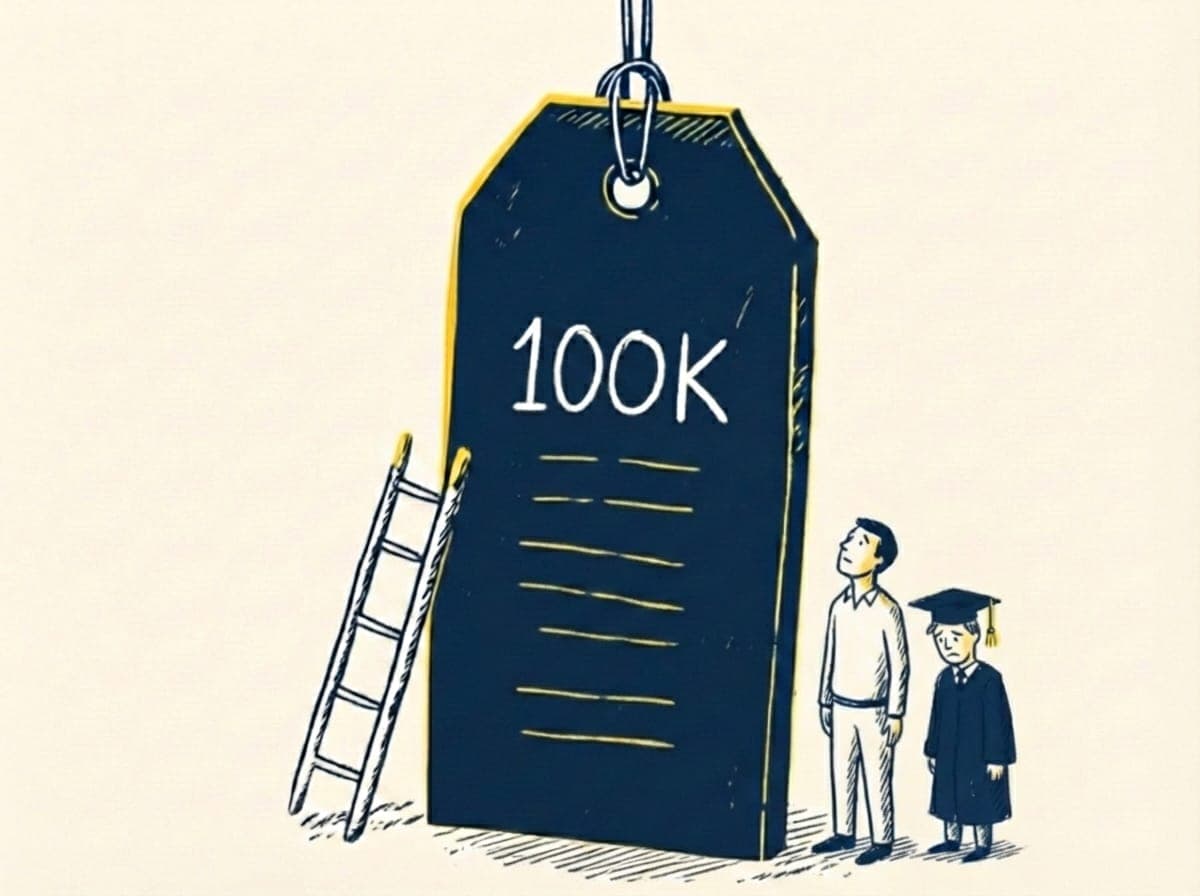
The median college grad breaks even by 27. But at the same school, net price can vary by $50K+ based on income. Here's what the affordability debates miss.
Daniel Rogers
Stop choosing programs by school prestige. SIU-Carbondale ranks #1 nationally in 2 fields. Here's the data-driven framework for evaluating college programs.
Daniel RogersA little over a decade ago, I moved back home for family reasons and used it as an opportunity to step back and think about the problems I wanted to work on. The question of how people pay for college was the one that kept resonating with me, time and time again. To understand how I could help people navigate this gap, I spent a lot of time—okay, a very unhealthy amount of time—analyzing and synthesizing data around higher education. I was trying to figure out where the value actually was, wi
Daniel RogersThanks for stopping by College Azimuth. This site exists to help everyday people—students, families, parents, counselors, policymakers—make sense of the enormous amount of information surrounding higher education. College, despite all the debate around it, remains one of the most consequential financial decisions a person and their family can make. Most of the information available today is anchored around prestige or secondary factors—campus life, amenities, reputation. I’m not saying those t
Daniel Rogers