
Some thoughts on AI and college and career decisions
AI is already in college and career decisions. The question is whether it bridges the structural advising gap families face — or drives it farther apart.
Data-driven analysis of college outcomes, affordability, and value. Research insights powered by verified federal data.
By Daniel Rogers · College Azimuth Research

Happy Friday everyone. For this week's article I wanted to do two things: 1. Preview some of the research I'm doing on AI and college decisioning 2.

Happy July, everyone — and apologies for the delay. As I think I mentioned, I've been going through an international move with the family to Canada, and apparently that's hard with three young kids.

We updated our value-added earnings metric — the WAR for colleges. The model now separates what students bring in, what a school offers through its program mix and market position, and what remains unexplained. Here is how we built it, and what it shows for five Illinois schools.

A big part of the decision of what college to go to is framed around whether or not you'll make good money coming out of it, or whether you'll get a good return on investment for your troubles.

We mapped supply and demand for college graduates across 391 US metro areas. The pipeline fills just 62% of annual openings nationwide.

The standard graduation rate excludes most students. Federal data shows the real number is 28 points higher at schools like UTRGV. Here's what the metric actually measures — and what it misses.

How many loans would a no-loan school loan, if a no-loan school could give loans? If you said the answer was zero, you'd be wrong.

Parent PLUS loans hide a second debt burden. We analyzed debt burdens to show how family finances change when parents borrow too—and who gets squeezed.

A risk framework for evaluating college debt: Green Zone, Blue Zone, Yellow Zone, Red Zone. Which schools are worth the bet?

Financial GPS is a new framework for navigating college debt. See how payment burden tiers work, why ROI metrics fall short, and how to find schools where debt actually works.

I want to start Part 3 with something that's been on my mind: the power of example, and the danger of leaving things unsaid.

400,000 families a year can't afford their Parent PLUS loans. At private universities, 58% are underwater. Here's what return on investment calculations miss.
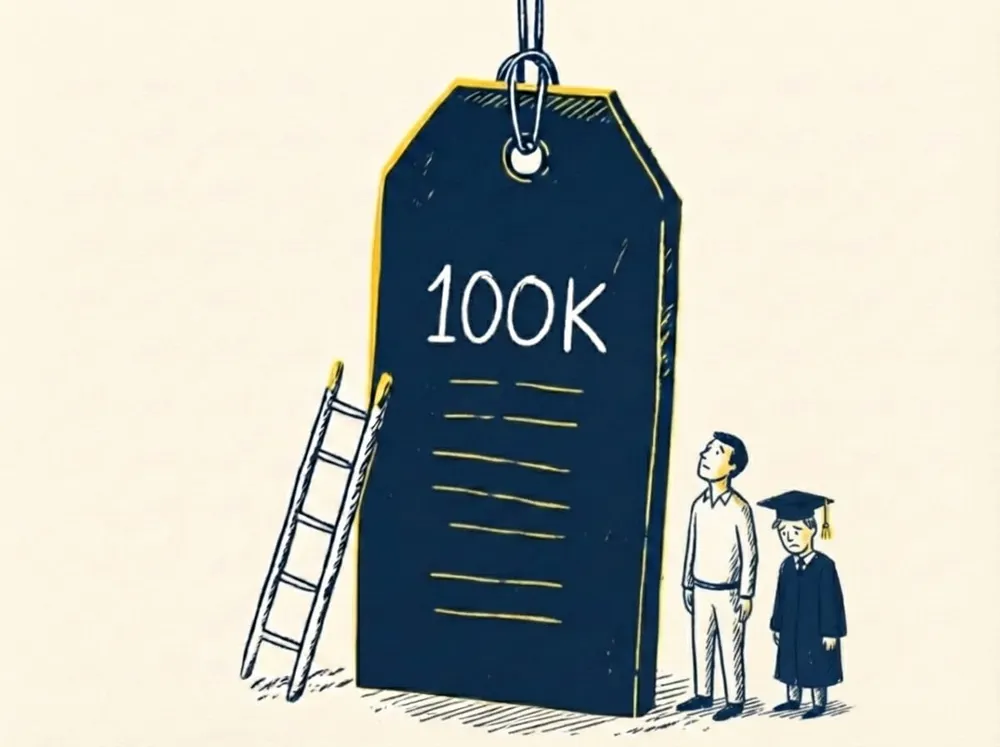
The median college grad breaks even by 27. But at the same school, net price can vary by $50K+ based on income. Here's what the affordability debates miss.

Stop choosing programs by school prestige. SIU-Carbondale ranks #1 nationally in 2 fields. Here's the data-driven framework for evaluating college programs.
A little over a decade ago, I moved back home for family reasons and used it as an opportunity to step back and think about the problems I wanted to work on.
Thanks for stopping by College Azimuth. This site exists to help everyday people—students, families, parents, counselors, policymakers—make sense of the enormous amount of information surrounding…
Explore our data stories through interactive charts. Click any chart to interact with the data.
Select any U.S. state to see the top 10 careers where annual job openings far exceed the number of graduates — revealing where the talent pipeline falls short.
Interactive bubble map of 383 U.S. metros colored by how well local colleges fill workforce demand — from critically undersupplied to significantly oversupplied.

